Howdy field testers,
Our website is currently a work in progress (startup-vibes!). It’s still really important for us to introduce circularity, so apologies for the informal feel of the website, however the initial messaging should still feel relevant. We’d love to know what is landing for you and your family, and what still doesn’t feel quite right.
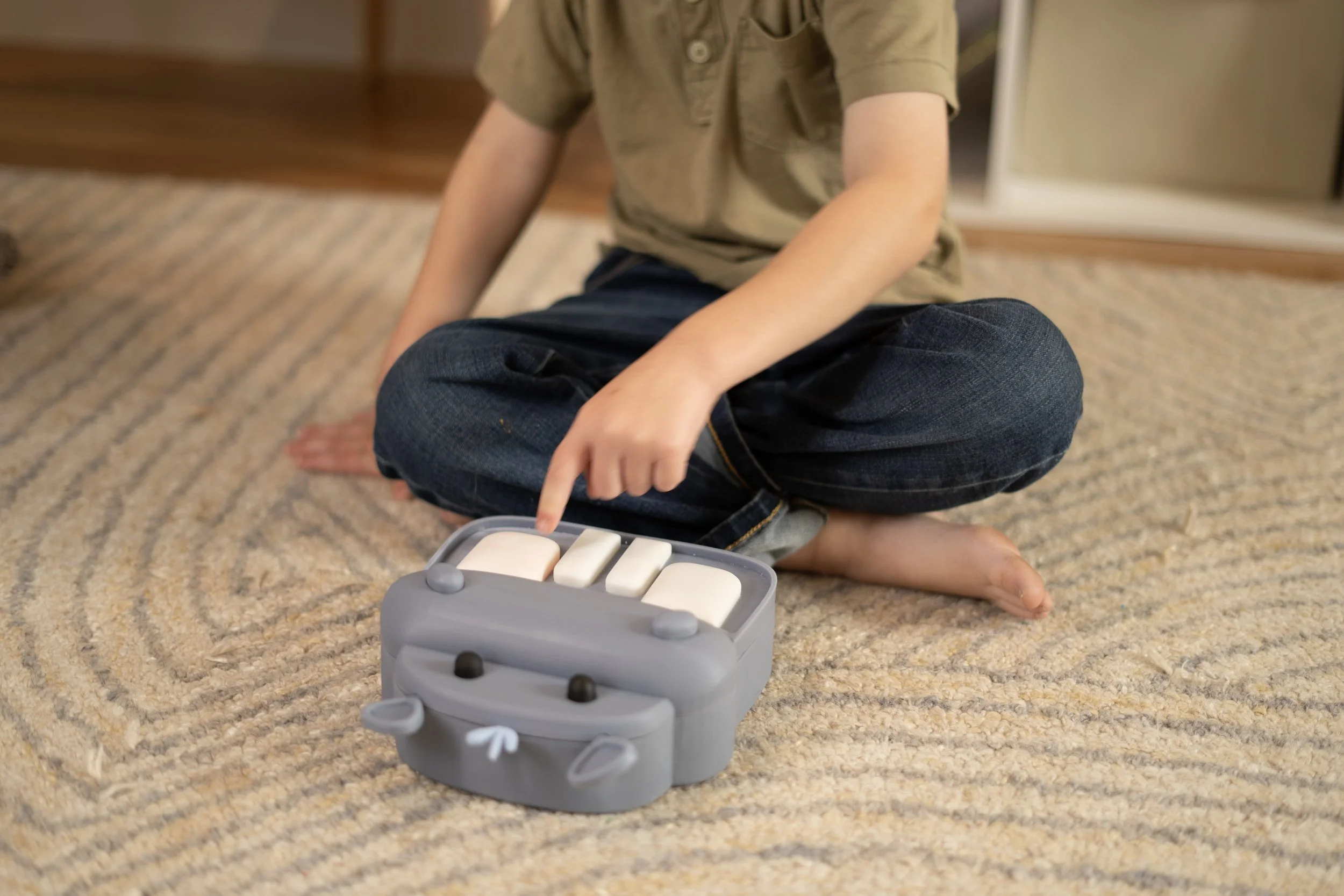
What makes Harra the Hippo so magical?
(the parent version)
The circularity model:
This is the heart and soul of how we make all of our decisions. Circularity means that everything can be a resource for something else. It’s easy to think about in the lifecycle of a flower: A flower needs healthy soil, sun, and water to thrive. Eventually, a flower’s life comes to an end…but this isn’t where the story ends. The seeds in that flower are pollinated and spread to create new life, and the decaying flower becomes new nutrients in the soil. It’s the concept that there’s no waste in nature. We’ve taken that concept and are turning it into a business, so we can all thrive together.
How does this look in reality? The materials we’ve chosen, how we designed our product, where we build our products, are all based on creating this circular ecosystem. We’ll pay you to return the toy back to us when you’re done. When the used Harra comes back, we’ll perform a quality check to see if any of the components can be reused (worth a shot, right?!). But let’s be real, we’re dealing with toddlers….so anything that’s been dinged up, we’ll separate and send to it’s new resource stream. Rather than this material going to the landfill, we’ll get to put that material to good use to make brand new toys!
Here’s how that looks in some of our decisions:
The plastic we use:
We’re using a high-quality bioplastic that’s made from sugar cane and corn. This is important for a few reasons. First, it’s not petroleum-based so we’re already reducing our environmental impact from material choice. Second, if we’re thoughtful about how we manufacture it (which most companies aren’t), we can create our own clean circular ecosystem of materials so that we can keep our toys safe for your little ones. Third, the “high-quality” part and closed ecosystem means we don’t have to downgrade our recycled plastics for a lower-grade use, we can use it to keep creating new toys.
The “bottle deposit” method to close the loop:
Closing the loop is crucial in a circularity model. We want our used toys. We’ve designed these materials to be brought back into the beginning of our supply chain. We believe in it so much, we’ll pay YOU to take our used products back.
This is what’s called “reverse logistics”, funneling products back to companies to close the loop. Similar to the bottle deposit, we’ll then use this stream of incoming material, rather than having it end up in the landfill.
The local manufacturing:
None of this would make sense if our products were made overseas. It would be too expensive (both in cash and environmental impact) to even think about this concept with overseas supply chains. That’s why we’re creating a local ecosystem closer to home.
Current toys are made overseas, with very limited options to extend the life of that toy, and made from questionable materials filled with additives. When you’re not planning to take your product back, your decision process is different. It’s not that it’s “wrong”, it’s just different. The circularity method means that we have a lot of stakeholders in our decision making process: our parents, our little ones, our business, our environmental ecosystem. How healthy is the soil, sun, and water that’s feeding our ecosystem?